

Overview
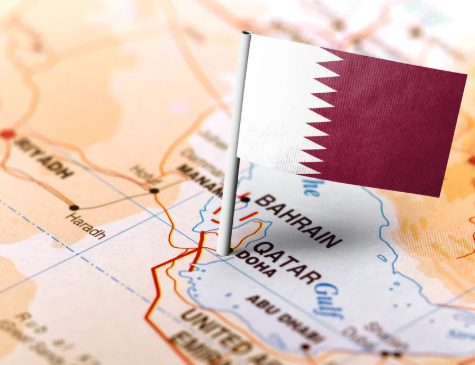
Qatar enters the second half of 2026 carrying both a fresh shock and a deep reserve of resilience. Regional tensions earlier in the year disrupted operations at the country's energy heartland in Ras Laffan, temporarily reducing liquefied natural gas (LNG) export capacity by roughly 17% and putting an estimated US$20 billion of annual revenue at risk while repairs are carried out. Yet beneath that headline, the structural picture remains one of the steadiest in the Gulf: investment-grade credit ratings, a fast-diversifying non-energy economy, and one of the largest sovereign wealth buffers in the world. This article looks only at the economics — what the disruption means, where the economy is heading, and what it implies for anyone weighing whether to open a business here.
The Near-Term Shock
The most direct economic effect of the conflict was felt in the energy sector. LNG is the engine of Qatar's public finances, and the temporary loss of capacity at Ras Laffan is significant. Repair and full restoration of affected facilities is expected to take time — estimates range from one to several years depending on the scope of work. Because a large share of government revenue is tied to hydrocarbon exports, forecasts for 2026 have widened considerably: the IMF had earlier projected real GDP growth above 6% for 2026 on the back of gas expansion, while post-disruption scenarios from some analysts model a contraction of as much as low-double-digits if outages persist. The honest summary is that 2026 carries unusually high forecast uncertainty, concentrated almost entirely in the energy line.
Importantly, the disruption is widely viewed as cyclical rather than structural. Qatar's gas reserves, customer relationships, and long-term contracts remain intact, and the country has the fiscal strength to absorb a temporary revenue gap without derailing its spending commitments.
Is It Safe to Open a Business?
For an entrepreneur or company, the practical question is whether Qatar remains an attractive and stable place to invest. On the fundamentals, the answer is broadly favorable, with a few caveats to manage.
What is working in your favor
Qatar now allows up to 100% foreign ownership across most sectors, removing the historic requirement for a local majority partner in many activities. Invest Qatar has launched a US$1 billion incentives program offering financial support of up to 40% of eligible investment costs over five years — covering setup, construction, leasing, equipment, and staffing — targeted at advanced industries, logistics, technology, and financial services. The country is pursuing a cumulative foreign direct investment target of US$100 billion by 2030, and already hosts well over 14,000 foreign firms. Add to that a US-dollar-pegged currency, no personal income tax, a competitive 10% corporate tax rate in most cases, world-class infrastructure built around the 2022 World Cup, and a strategic location for re-export and logistics.
What to weigh carefully
The main caveats are near-term and sector-specific. The energy disruption introduces some volatility into the 2026 fiscal picture, and the broader region carries geopolitical risk that any investor should price in. Sectors tied directly to hydrocarbons or to Gulf shipping lanes face more short-term uncertainty than domestically focused businesses. For most non-energy ventures — consumer services, technology, logistics, tourism and hospitality, professional and financial services — the underlying demand drivers (population growth, government diversification spending, and a high-income consumer base) remain firmly in place.
Bottom line
Qatar in mid-2026 is best described as fundamentally strong with a temporary energy-sector cloud. For business formation, the structural case — full foreign ownership, generous incentives, a stable currency, low taxes, and a government actively spending to diversify — is intact and arguably more welcoming than at any point in the past decade. A prudent investor would proceed, while choosing a sector aligned with the diversification agenda, building a conservative cash buffer for near-term volatility, and taking professional local advice on licensing and structure.
Sources
- IMF / The Peninsula — Qatar GDP growth forecast
- Invest Qatar — US$1 billion incentives programme
- Euronews — North Field expansion proceeds
- Global Finance — Qatar's diversification drive
- UNCTAD — 100% foreign ownership law