

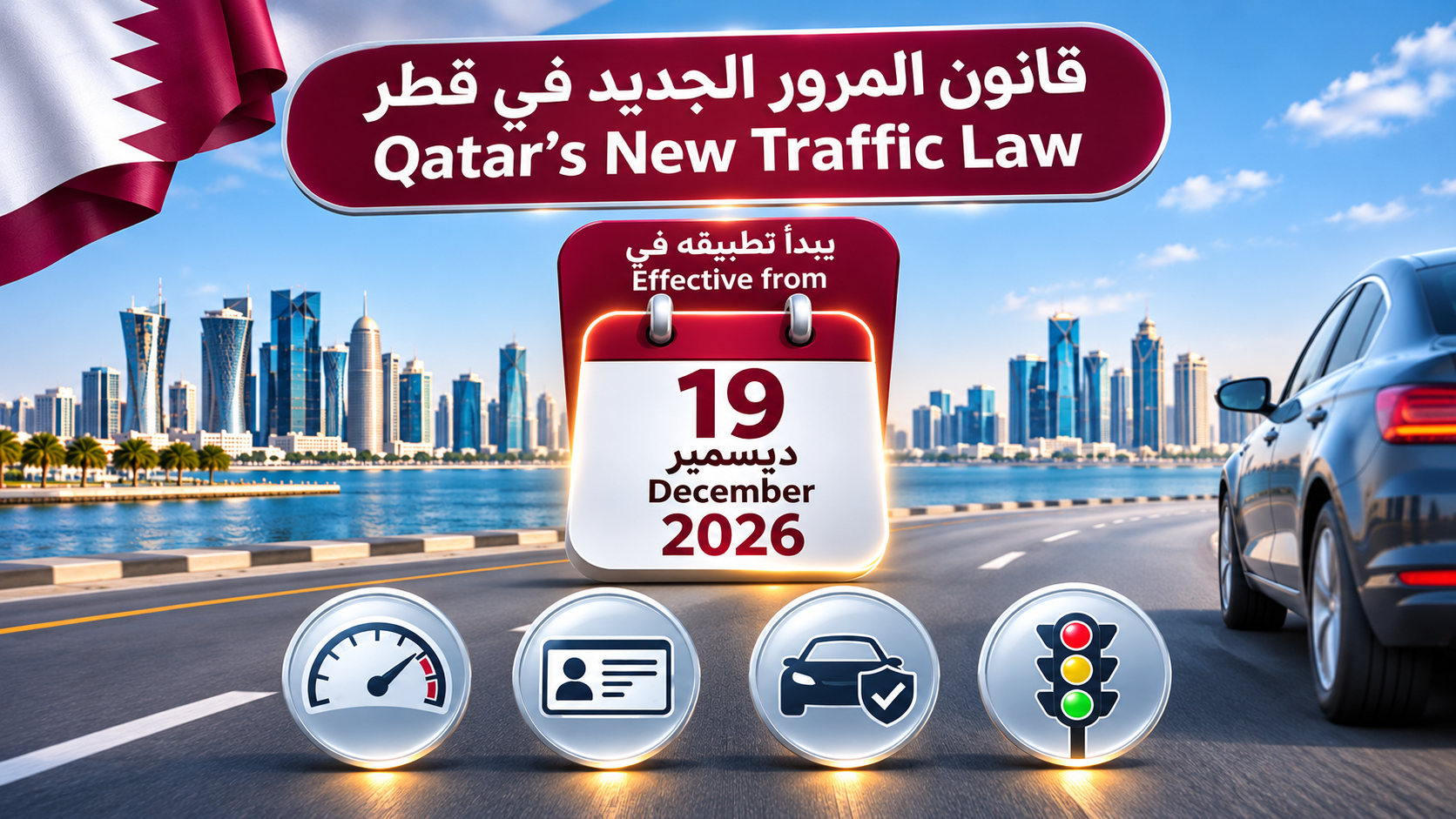
Qatar Issues New Traffic Law No. 19 of 2026: What Drivers and Businesses Need to Know
Qatar has issued a new Traffic Law. Law No. 19 of 2026 was published in the Official Gazette, Issue No. 22, on 18 November 2026 and replaces the Traffic Law issued by Decree-Law No. 19 of 2007, which has governed Qatar's roads for almost two decades. According to the Ministry of Interior, the new law takes effect on 19 December 2026. Several provisions will be detailed further in executive regulations and implementing decisions that have yet to be issued.
Handheld phones and vehicle impoundment. Article 62 prohibits holding or using a mobile phone or any other device by hand while driving. Under Article 99, the traffic authority may administratively impound a vehicle for up to 90 days in specified cases, including handheld phone use. For the most serious offences, such as reckless driving that endangers lives, running a red light, exceeding the speed limit by more than 60 km/h, driving against traffic on expressways, unauthorised racing and repeated handheld phone use, Article 117 allows the court to order confiscation of the vehicle after conviction.
Higher penalties. The law separates the maximum penalties a court can impose from the settlement amounts that can be paid to close a violation. Driving without the required licence can lead to a fine of up to QAR 50,000 and/or up to three years' imprisonment. Leaving a child under 13 alone in a vehicle carries up to QAR 20,000 and/or three years, with a settlement of QAR 10,000. Throwing litter or spitting from a vehicle carries a settlement of QAR 2,000. Pedestrians who ignore signals at crossings face up to QAR 10,000 and/or one year. Under Article 123, the licensing authority may reduce a settlement by up to 50% if it is paid within 30 days, but this reduction is discretionary rather than automatic.
Licences, e-scooters and trams. The minimum age for a motorcycle licence, including a learner's licence, rises from 18 to 21 (Article 37). E-scooters and similar vehicles must now be registered and carry official number plates, and riders must wear helmets and use designated lanes where they exist; using an unregistered e-scooter carries a QAR 1,000 settlement. Motorists must stay at least five metres behind a tram and must not overtake it on either side.
Rules that affect companies. Writing, drawings, stickers, logos or images on a vehicle body now need written approval from the licensing authority (Article 30), and using a vehicle for advertising, including promotional signs or audio devices, also requires approval, separately from the advertising law. Businesses that brand their company cars, vans or delivery vehicles should review their liveries and obtain approval. The law also requires certain commercial vehicles, including rental cars, limousines, delivery vehicles, trucks and recovery or equipment-carrying vehicles, to be fitted with tracking devices (Article 6). Owners of vehicles registered for use outside Qatar must return the plates within 30 days after the permit expires, and failure to do so can lead to a fine of up to QAR 100,000.
Transition period. Vehicle owners have six months from the law's commencement to bring their vehicles into compliance, and the Minister of Interior may extend this by a further six months. Existing driving licences, vehicle registrations and permits remain valid until they expire, and renewals will follow the new rules.
Companies that run vehicle fleets, employ drivers or operate delivery, rental or transport services should use the coming weeks to review vehicle branding, tracking requirements and internal driver policies, and to make sure employees understand the stricter rules on phone use. Future Gate's specialists in Qatar help businesses with vehicle registration and licensing transactions and Ministry of Interior procedures. Contact us to review what the new Traffic Law means for your company vehicles.